

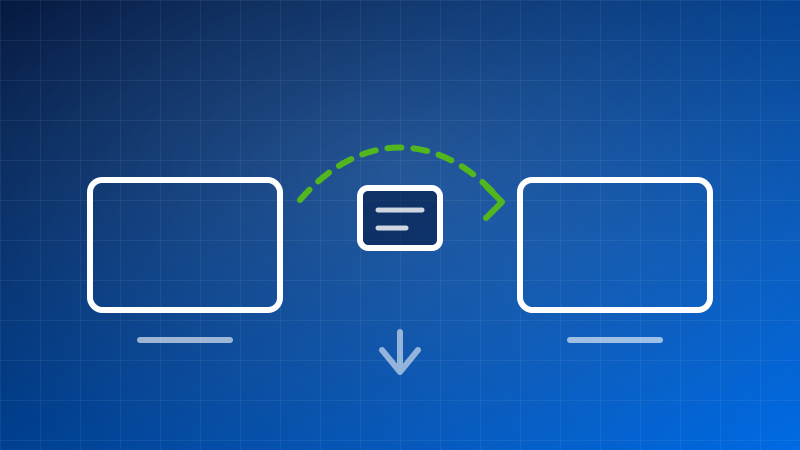
Before you touch anything, make a backup
Not a copy of the folder. A backup, made from inside QuickBooks, saved somewhere that is not the computer you are about to stop using.
This matters because the rest of this guide is recoverable if something goes wrong, and only if you did this step. Do it before you start, not after something looks odd.
What actually needs to move
The company file is the obvious part, but it is rarely the whole story:
- The company file itself — the main data file for your business.
- Attachments. If you have attached documents to transactions, they live in a separate folder alongside the file. Copy the folder, not just the file, or the attachments break.
- Custom templates and forms. Invoice layouts you have customized are stored with the file, but templates you exported separately are not.
- Your license and product numbers. You need them to activate on the new machine. They came with your purchase — find them before you need them.
The order that avoids trouble
Install QuickBooks on the new computer first, and activate it — the installation guide covers both steps. Then move the data.
Doing it the other way round — copying the file to a machine with no QuickBooks on it yet — is how people end up with a file they cannot open and no clear idea whether the copy worked.
Once QuickBooks is running on the new machine, open your file from wherever you copied it to, and let QuickBooks update it if it asks. It may need to rebuild an index the first time; that is normal.
Check it properly before you retire the old computer
Do not wipe the old machine the same day. Open the file on the new computer and check:
- The most recent transactions are there, including anything entered on the last day.
- Your reports still run, and the numbers match what you saw before the move.
- A couple of attachments actually open.
- Your customized invoice template still looks right.
Give it a week of normal use before you decommission the old machine. The problems that surface late are usually the small ones — a template, a memorized report — and they are far easier to recover from a machine that still works.
Where people go wrong
Copying while QuickBooks is open. Close the program first. A file copied mid-write can be subtly damaged in ways you find weeks later.
Assuming a backup is a file. A backup file and a company file are different formats. Know which one you have.
Never testing the backup. A backup you have not restored is a hope, not a plan. Restore it once, somewhere harmless, so you know it works.
Changing platform or version at the same time
Windows and Mac editions do not share a company file format, so moving between them is a conversion rather than a copy — read Mac vs Windows before you plan it.
If the new computer is also your moment to move to the 2024 release, start with upgrading to QuickBooks Desktop 2024, then pick the edition: Pro Plus for up to three users, Enterprise beyond that, or Mac Plus on macOS.
If it will not open
Take a breath — you have a backup. Note the exact error message, including any number, and get in touch. Most of these are ordinary and fixable, and the message tells us which one it is.